
SPECIFICATIONS
APPLICATIONS
Garment & Textile Factories
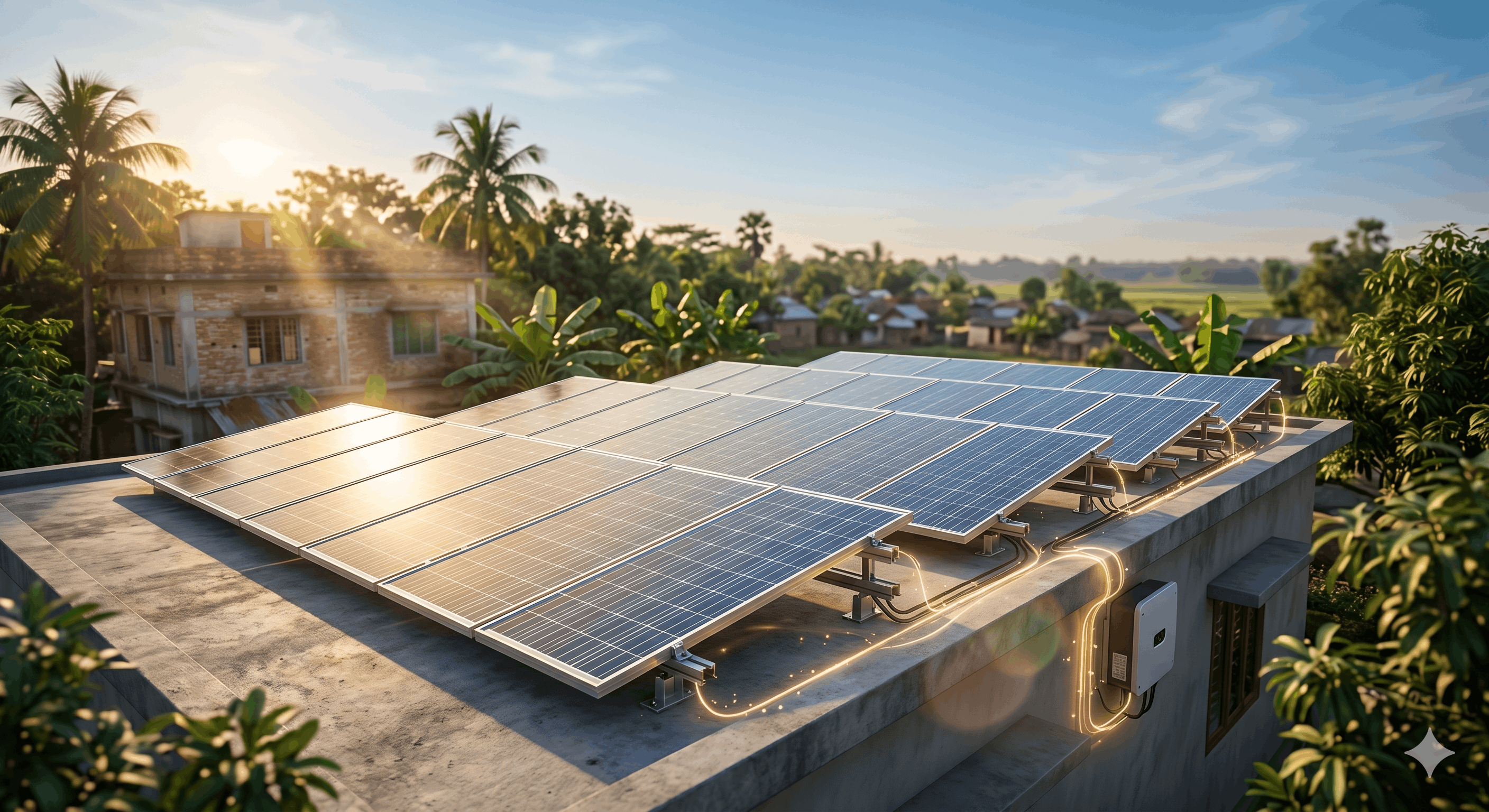
Large flat rooftops are ideal for solar. A 500 kWp system on a mid-sized garment factory can offset 40–60% of daytime grid demand.
Cold Storage Facilities
High daytime electricity consumption for refrigeration aligns well with solar generation profiles, maximising self-consumption.
Commercial & Office Buildings
Rooftop solar reduces air-conditioning and lighting bills during peak tariff hours, with net metering credit for weekends and holidays.
Industrial Parks & EPZs
Common-area solar installations for export processing zones, with shared generation metered across tenant connections.
Agricultural & Irrigation
Off-grid solar pump systems for irrigation in areas with unreliable grid supply or no grid connection available.
Healthcare Facilities
Hybrid solar with battery backup ensures critical equipment continues operating during grid outages without relying on generator fuel.
FREQUENTLY ASKED QUESTIONS
How much roof space does a solar system require?
As a rule of thumb, a 1 kWp solar system requires approximately 6–8 square metres of shadow-free roof area. A 100 kWp system needs around 600–800 m². We carry out a roof assessment as part of our free site survey to confirm available area and any shading constraints.
How long does a grid-tied system take to install?
A typical industrial rooftop system of 50–200 kWp takes 2–4 weeks from arrival of materials on site. The net metering application to BPDB or DESCO runs in parallel and typically takes 4–8 weeks for approval. We manage both timelines on your behalf.
What happens to my solar system during a power cut?
Standard grid-tied inverters shut down automatically during a grid outage for safety. If you need power during outages, we design a hybrid system with battery storage that maintains critical loads through a configured battery bank, with the solar array recharging the batteries during daylight.
What is the expected return on investment?
For a typical industrial grid-tied system in Bangladesh, the simple payback period is 4–6 years depending on your electricity tariff, generation yield, and self-consumption ratio. After payback, the system produces effectively free electricity for 20+ additional years. We prepare a detailed financial model as part of our proposal.